
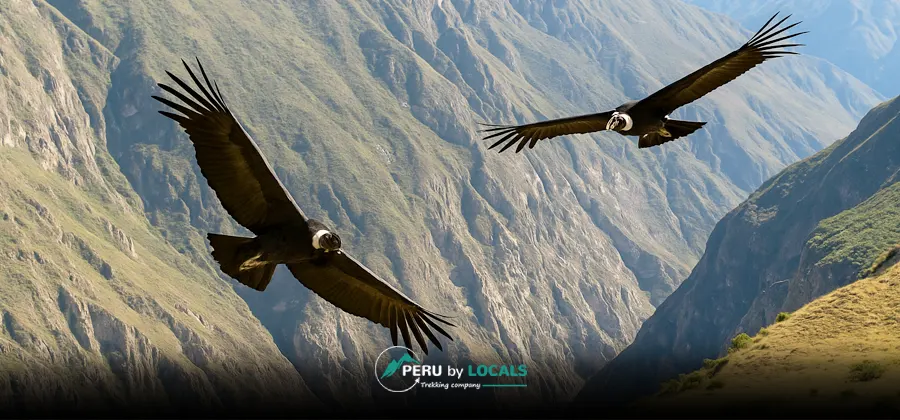
Perched high upon the vertiginous cliffs of the plunging Apurímac River Canyon in southern Peru lies one of the Andes’ most awe-inspiring and best-kept wildlife secrets: the Condor Viewpoint of Chonta (Mirador de Cóndores de Chonta). Tucked away in the scenic district of Limatambo, roughly 98 kilometers west of Cusco, this remote natural lookout offers visitors the extraordinary privilege of watching the sacred Andean Condor (Vultur gryphus) soar wild and free in its ancestral home. Unlike the crowded commercial lookouts of Arequipa’s Colca Canyon, Chonta remains raw, peaceful, and untouched by mass tourism. There are no guardrails, no loud souvenir stalls, and no tour buses blocking your view—just the whisper of Andean winds, deep canyon silence, and the shadow of giant wings slicing across the sky.
Why Chonta is a Hidden Gem for Travelers in Cusco: Many travelers mistakenly believe they must take a grueling 10-hour bus ride to Colca Canyon in Arequipa to see wild condors. In reality, Chonta is situated right here in the Cusco region! You can easily visit it on an unforgettable day tour from Cusco, combine it with visits to sacred Inca archaeological sanctuaries like Killarumiyoc and Tarawasi, and stand in awe as up to 8 to 12 condors glide just meters above your head!
- Chonta Condor Viewpoint: Quick Facts & Overview
- An Off-the-Beaten-Path Adventure: Why Chonta Beats Colca
- The Andean Condor: Lord of the Skies & Inca Deity
- The Trail to Chonta: The 3 Scenic Lookouts
- When & Why Condors Soar: The Science of Thermal Updrafts
- En-Route Inca Treasures: Killarumiyoc & Tarawasi
- Flora, Fauna & Geology of the Apurímac Canyon
- How to Get There: Independent Travel vs. Peru by Locals Tour
- Interactive Wildlife Photography & Day-Hike Checklist
- Frequently Asked Questions (FAQs)
- Conclusion & Booking Your Chonta Expedition
1. Chonta Condor Viewpoint: Quick Facts & Overview
2. An Off-the-Beaten-Path Adventure: Why Chonta Beats Colca
For decades, tourists flocked exclusively to the Cruz del Cóndor in Arequipa's Colca Canyon to glimpse South America’s most revered bird. While Colca is impressive, the experience often entails 3:00 AM wake-up calls, thousands of tourists jostling for elbow room along concrete barriers, and long 10-hour transit days.
In contrast, the Chonta Condor Lookout in Cusco is an intimate, serene sanctuary. Located just a 3-hour scenic drive from Cusco's historic center, the trail traverses peaceful high-altitude pastures where traditional Quechua villagers tend flocks of sheep and herds of horses. At the edge of the canyon, you sit on natural stone boulders overlooking the vast abyss. There are no crowds—often, your group will be the only humans present on the entire mountain ridge, allowing you to hear the rush of wind through the giant primary feathers as condors bank overhead.
3. The Andean Condor: Lord of the Skies & Inca Deity
The Andean condor (Vultur gryphus) is the undisputed monarch of the high Andes. In Inca cosmology, the universe was divided into three realms, represented by the sacred Andean Trilogy:
- The Snake (Uku Pacha): Symbolized the underworld, the subconscious, and the realm of ancestors.
- The Puma (Kay Pacha): Symbolized the physical world of earthly life, power, and human strength.
- The Condor (Hanan Pacha): Symbolized the celestial upper realm of gods, stars, and spirit. As the only creature capable of soaring to heights exceeding 5,000 meters, the condor served as the sacred messenger carrying prayers between humanity and the Sun God (Inti).
| Biological Trait | Field Measurement | Natural Function & Significance |
|---|---|---|
| Wingspan | Up to 3.3 meters (10.8 feet) | One of the largest wingspans of any flying land bird on Earth |
| Body Weight | 11 to 15 kg (24 to 33 lbs) | Requires rising warm thermals to take flight without exhausting flapping |
| Lifespan | 60+ years in the wild, 75+ in captivity | Extremely long-lived, monogamous, mate for life, slow reproductive rate |
| Ecological Role | Strict Scavenger (Carrion Feeder) | Cleans the ecosystem of carcasses, preventing waterborne disease outbreaks |
| Conservation Status | Vulnerable (IUCN Red List) | Protected by Peruvian law; Chonta represents an essential nesting refuge |
4. The Trail to Chonta: The 3 Scenic Lookouts
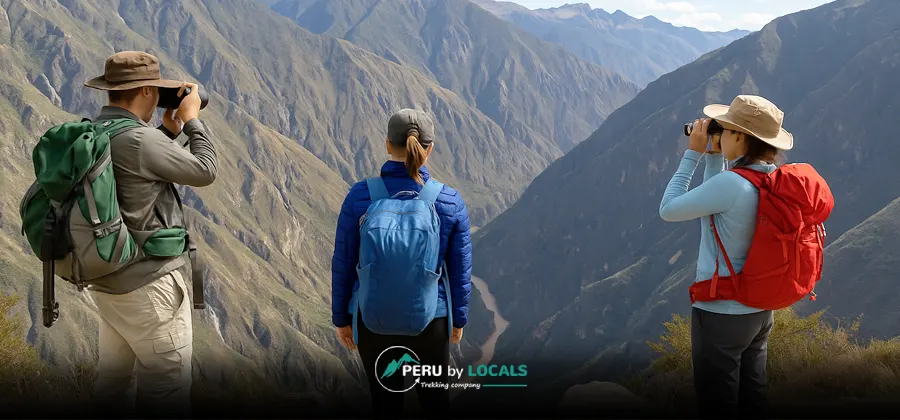
The trek to the lookouts starts at the small rural community checkpoint in Chonta village (3,400 msnm). The path follows a well-maintained, gently rolling dirt trail carved along the rim of the canyon. The round-trip hike is 7 kilometers (4.4 miles) total, taking roughly an hour each way.
Along the route, visitors encounter three distinct natural observation terraces:
- Viewpoint 1 (El Balcón Inicial): Located roughly 20 minutes from the trailhead, offering your first breathtaking look down into the turquoise waters of the Apurímac River winding through the canyon floor.
- Viewpoint 2 (Mirador Intermedio): Positioned at the 45-minute mark, providing a broader panorama of the rugged vertical cliffs and deep rock chimneys where condors build their cliffside roosts.
- Viewpoint 3 (El Mirador Principal - Huaco Punta): The crown jewel of the trail. Here, the knife-edge cliff projects out into the canyon gorge, providing an unobstructed 360-degree theater over the thermals. Visitors sit comfortably on natural stone seats, watching condors rise effortlessly from the shadows below and glide at eye level just 15 to 30 meters away!
5. When & Why Condors Soar: The Science of Thermal Updrafts
Because Andean condors are heavy birds with immense wings, flapping their wings consumes vast amounts of metabolic energy. Instead of active flapping, condors rely on thermal convection currents—columns of warm air created as the midday sun bakes the rocky canyon walls and floor.
Between 3:00 PM and 4:30 PM, these thermal updrafts reach peak velocity. Returning from their morning foraging flights across the high puna grasslands of Salkantay and the Vilcabamba mountain range, condors catch these rising thermal elevators to effortlessly spiral upward back to their roosting caves in the cliffs of Chonta.
Dry Season (May to October): Highly recommended. Clear skies and strong sunshine generate reliable thermal updrafts almost every afternoon. Sighting success rates during these months exceed 90%, with lucky visitors frequently spotting groups of 6 to 14 condors simultaneously.
Rainy Season (November to April): Sightings are still possible, but overcast skies and afternoon showers can dampen thermal currents, causing condors to remain sheltered in their roosts.
6. En-Route Inca Treasures: Killarumiyoc & Tarawasi
One of the greatest benefits of embarking on a guided day excursion with Peru by Locals is that the journey to Chonta passes through the fertile Limatambo valley, home to two fascinating, little-known Inca archaeological complexes:
A. Killarumiyoc: The Sacred Moon Temple
Located near Ancahuasi, Killarumiyoc translates from Quechua as "The Stone of the Moon". This serene ceremonial complex is centered around an enormous limestone boulder masterfully carved with an elegant crescent-moon throne. Surrounded by agricultural terraces, water fountains, and sacred meditation caves, Killarumiyoc was dedicated to Mama Killa, where Inca priestesses tracked fertility cycles and lunar solstices.
B. Tarawasi: The Polygonal Palace of Limatambo
Situated on the valley floor of Limatambo, Tarawasi served as an imperial administrative checkpoint along the royal Inca highway connecting Cusco with the coastal valleys. Its most striking feature is a massive stone retaining wall built using rare 28-sided polygonal interlocking masonry—a stonework technique so precise that not even a knife blade can fit between the joints—and a monumental ceremonial altar (ushnu).
7. Flora, Fauna & Geology of the Apurímac Canyon
The Apurímac River Canyon is one of South America's most dramatic geological cuts, carved over millions of years by the glacial meltwaters that form the principal tributary of the mighty Amazon River. The dramatic drop from the 4,000m puna down to the 1,800m subtropical valley floor creates stacked ecological life zones hosting rich biodiversity:
- Mammals: Andean foxes (Pseudalopex culpaeus), white-tailed deer (taruca), mountain vizcachas (cavy-like rodents resembling chinchillas), and elusive pumas.
- Avian Species: In addition to condors, you can spot the Black-chested Buzzard-Eagle, American Kestrel, giant hummingbirds, torrent ducks, and Andean flickers.
- Native Flora: High-altitude ichu grass, aromatic mountain herbs like wild muña and markhu, flowering cantua (the sacred national flower of Peru), and giant columnar cacti adapted to the arid canyon microclimate.
8. How to Get There: Independent Travel vs. Peru by Locals Tour
Visiting Chonta can be organized independently or via a private guided tour. Here is a realistic comparison:
| Travel Aspect | Independent Public Transport | Private Tour with Peru by Locals |
|---|---|---|
| Transit Logistics | Shared combi to Limatambo (2.5 hrs), then negotiate an expensive private taxi up the unpaved mountain switchbacks to Chonta. | Comfortable, private door-to-door transport direct from your Cusco hotel, timed perfectly for optimal 3:00 PM thermal currents. |
| Return Safety | Taxis rarely wait in Chonta; risk of being stranded after dark in a remote village with zero cellular reception. | Your private vehicle and professional driver wait for you, ensuring a safe, relaxed evening return to Cusco. |
| Cultural Stops | Requires hiring separate taxis and managing multiple transfers to see Killarumiyoc and Tarawasi. | Includes guided explorations of both Killarumiyoc and Tarawasi with expert archaeological storytelling. |
| Wildlife Expertise | No interpretive support; easy to mistake buzzard-eagles for juvenile condors. | Experienced naturalist guide equipped with high-powered spotting binoculars and deep knowledge of condor behavior. |
| Food & Dining | Limited snacks in rural village bodegas; pack your own dry sandwiches. | Delicious, chef-prepared hot picnic lunch or organic traditional lunch in Limatambo included. |
9. Interactive Wildlife Photography & Day-Hike Checklist
Use this interactive checklist to prepare your gear for your expedition to the Chonta Condor Viewpoint:
| Check | Essential Item | Category | Why You Need It |
|---|---|---|---|
| Photography | Captures crisp, detailed feather and facial details as condors bank over the canyon | ||
| Optics | Helps spot juvenile condors and nests tucked deep in distant cliff cavities | ||
| Apparel | Late afternoon winds on the 3,400m canyon edge can become bitingly cold | ||
| Footwear | The 7 km round-trip trail features loose gravel and rocky cliffside steps | ||
| Sun Care | There is minimal shade on the ridge trail during midday walks | ||
| Money | For the local Chonta community conservation entrance fee | ||
| Hydration | Keeps you hydrated and energized while waiting for the afternoon flight window |
10. Frequently Asked Questions (FAQs)
Where is the Condor Viewpoint of Chonta located?
The Condor Viewpoint is situated near the rural indigenous community of Chonta, within the Limatambo district (Anta Province), approximately 98 kilometers (61 miles) west of Cusco. It perches at 3,400 meters (11,155 feet) above sea level, directly overlooking the dramatic abyss of the Apurímac River Canyon.
What is the best time of day to see Andean condors at Chonta?
The optimal viewing window is in the afternoon between 3:00 PM and 4:30 PM. As the afternoon sun warms the floor and sheer walls of the Apurímac Canyon, powerful thermal updrafts develop, allowing condors to glide effortlessly from their cliffside roosts and circle right above the viewing lookouts.
How long is the hike to the Chonta viewpoint and is it difficult?
The hike measures approximately 3.5 kilometers (2.2 miles) each way, taking about 1 to 1.5 hours of moderate walking on a gently undulating dirt footpath. The trail features three distinct lookouts, with the third viewpoint offering the grandest panoramic canyon vistas and closest condor encounters.
How does the Chonta Condor Lookout compare to Colca Canyon in Arequipa?
While Colca Canyon is world-famous, it is located an 8-hour drive from Cusco and can feel crowded with tourist buses. Chonta is a pristine, hidden gem easily visited on an intimate day trip directly from Cusco, offering authentic wilderness solitude and wild condors without massive tour crowds.
Can you combine the Chonta tour with Inca archaeological sites?
Yes! Peru by Locals full-day expeditions to Chonta include fascinating cultural stops at Killarumiyoc (the enigmatic Inca Moon Temple with its masterfully carved crescent stone) and Tarawasi (an Inca administrative sanctuary with rare 28-sided polygonal stone masonry and ceremonial ushnu).
What is the entrance fee for the Chonta viewpoint?
The local indigenous community of Chonta collects a nominal conservation fee of 10 to 15 Peruvian Soles (approx. $3 to $4 USD) per visitor at the trailhead booth. These funds directly finance trail maintenance, ecological protection, and community welfare.
What camera equipment should I bring for photographing condors?
We recommend bringing a telephoto zoom lens (minimum 200mm, ideally 300mm–600mm) with optical stabilization. Set your camera to shutter priority (1/1000s or faster) with continuous autofocus (AI Servo). Binoculars (8x or 10x magnification) are also highly recommended for spotting condors as they emerge from the canyon shadows.
11. Conclusion & Booking Your Chonta Expedition
Travel is ultimately defined by rare, soul-stirring moments: the roar of the wind across sheer granite precipices, the profound hush of an ancient Andean canyon, and the sudden, heart-stopping appearance of a 10-foot winged monarch banking gracefully through the golden afternoon light. The Condor Viewpoint of Chonta delivers that magic in its purest, most authentic form.
If you are yearning to experience the wild soul of the Peruvian Andes far beyond the well-trodden tourist circuits, join Peru by Locals. As a 100% locally owned Cusco company founded by certified high-mountain guides, we provide seamless private transport, expert wildlife interpretation, and deep respect for the rural indigenous communities that safeguard this sacred sanctuary. Check out our Cusco Day Tours or contact our team to craft your custom Andean wildlife expedition today!

Contact our travel specialist Jose Condor
"With my experience and passion for tourism, I will guide you to discover the unique attractions of Cusco, helping you plan an unforgettable vacation full of history and adventure."
Call me: +51 989 585 967


