
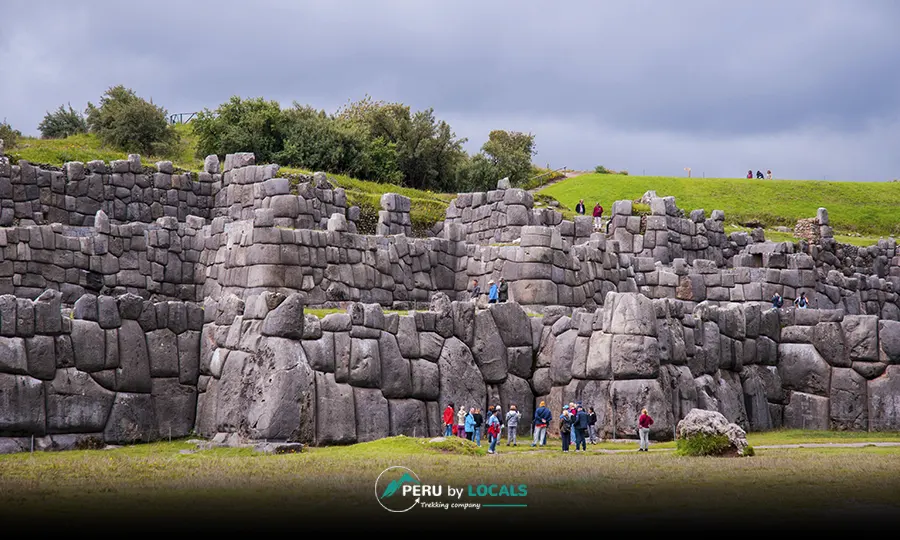
Perched dramatically upon a commanding hilltop 755 feet (230 meters) above the historic center of Cusco, Sacsayhuamán (often pronounced like "sexy woman" by travelers) is universally hailed as one of the world's most astonishing megalithic engineering wonders. Built in the 15th century under the visionary Inca Emperor Pachacuti and completed under Huayna Cápac, this colossal citadel protected the imperial capital and formed the symbolic head of the sacred royal puma. In this comprehensive 2027 guide, discover the secrets behind its 128-ton interlocking limestone blocks, the legendary 1536 Battle of Cahuide, its sacred solstice throne, subterranean Chincana tunnels, and essential tips for visiting on your Cusco City Tour.
Altitude & Best Time of Day: Sacsayhuamán sits at an elevation of 3,700 meters (12,139 ft)—approximately 300 meters higher than the Plaza de Armas. If visiting on your first or second day in Cusco, take a 10-minute taxi uphill to save your legs and lungs, then walk slowly downward through the picturesque San Cristóbal neighborhood after your tour. Visit between 2:00 PM and 5:00 PM when the afternoon sun illuminates the limestone blocks and the morning tour bus crowds have dispersed!
- 1. Introduction to Sacsayhuamán & The Sacred Puma of Cusco
- 2. The Architectural Marvel: Megalithic Masonry & Transport
- 3. Purpose, The 1536 Siege & Modern Rediscovery
- 4. Key Features to Explore Across the Complex
- 5. Visiting Sacsayhuamán in 2027: Tickets, Hours & Logistics
- 6. Sacsayhuamán & The Grand Festival of Inti Raymi
- 7. Practical Visitor Tips & Acclimatization Advice
- 8. Frequently Asked Questions (FAQs)
- 9. Conclusion & Planning Your Guided Cusco Adventure
1. Introduction to Sacsayhuamán & The Sacred Puma of Cusco
In the Quechua language, Sacsayhuamán translates most accurately as "Satisfied Falcon" or "Royal Hawk" (from Saqsay, meaning satiated, and Waman, meaning falcon). In Inca imperial planning, the city of Cusco was deliberately mapped in the shape of a sacred crouching puma—one of the three sacred animals of the Andean trilogy, representing earthly power (Kay Pacha).
While the Plaza de Armas and the Coricancha formed the belly and heart of the puma, Sacsayhuamán stood proudly as its crown and head. The iconic three-tiered zig-zagging stone walls represented the sharp, formidable teeth of the beast, glaring outward to deter potential invaders from the northern valleys.
The Incas divided the universe into three spiritual planes: the Condor representing the spiritual upper world (Hanan Pacha), the Puma embodying physical and earthly dominion (Kay Pacha), and the Serpent symbolizing the subterranean underworld (Uku Pacha). Sacsayhuamán manifests all three: elevated high in the sky like a bird of prey, sculpted as the head of the puma, and carved underneath with labyrinthine serpent-like tunnels (chincanas).
2. The Architectural Marvel: Megalithic Masonry & Transport
What captivates travelers, architects, and engineers from around the globe is the sheer, mind-boggling scale of Sacsayhuamán's stonework. The outer perimeter consists of three concentric tiered walls stretching over 1,000 feet (305 meters) in length.
- Unmatched Megalithic Proportions: The largest single limestone block on the lowest tier stands over 28 feet (8.5 meters) high, measures nearly 14 feet wide, and is estimated to weigh between 125 and 130 metric tons—heavier than many modern bulldozers!
- Mortarless Precision (Ashlar Technique): The stones were cut, shaped, and fitted together with such astonishing accuracy that not even a single sheet of paper or a razor blade can slip between the joints.
- Earthquake Resilience: The walls lean slightly inward at an angle (between 10° and 15°), and the rounded corners and interlocking pillowed facets absorb seismic shockwaves. During the devastating earthquakes of 1650 and 1950 that flattened colonial structures across Cusco, Sacsayhuamán didn't budge an inch.
How Did the Incas Move These Stones?
The Incas accomplished this without draft animals (like horses or oxen), without iron or steel tools, and without the mechanical wheel. Archaeologists have identified the primary limestone and andesite quarries at Muyna and Rumiqolqa, located between 5 and 35 kilometers away.
Under the imperial draft labor system known as the Mita, an estimated 20,000 to 30,000 workers mobilized over decades. They dragged the blocks across rugged Andean ravines using thick braided ropes made from native ichu grass (q'oya), wooden rollers fashioned from alder and eucalyptus logs, and inclined earthen earthen ramps lubricated with wet clay. Bronze and hematite stone hammers (jiwayas) were then used to meticulously grind and bevel the joints on-site.
3. Purpose, The 1536 Siege & Modern Rediscovery
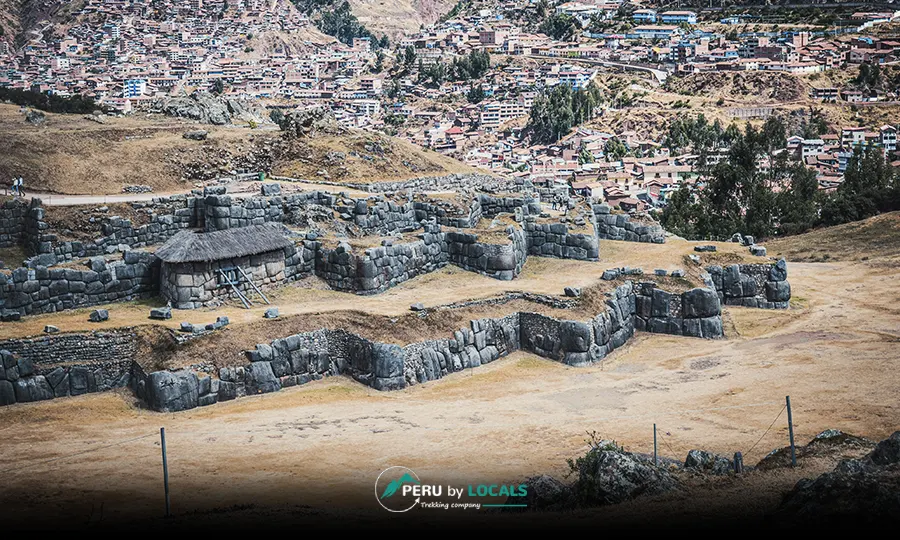
Fortress or Sacred Sun Temple?
Early Spanish chroniclers such as Pedro Cieza de León and Garcilaso de la Vega labeled Sacsayhuamán exclusively as a "fortress" due to its imposing ramparts, parapets, and strategic high ground. However, modern archaeological consensus reveals that it was primarily the Sun Temple of the Upper City (Hanan Qosqo).
The compound housed opulent imperial residential quarters for the Inca nobility, state warehouses (qullqas) brimming with textiles, weapons, and freeze-dried potatoes (chuño), sophisticated water cisterns, and a vast central esplanade dedicated to grand astronomical ceremonies honoring Inti, the Sun God.
The Battle of Sacsayhuamán (1536)
Sacsayhuamán was the primary theater of the bloodiest conflict of the Spanish Conquest. In May 1536, Manco Inca launched a massive counter-rebellion against Francisco Pizarro's forces, surrounding the Spanish in Cusco with over 100,000 Inca warriors. The Inca army seized Sacsayhuamán and used its elevated ramparts to rain down fiery arrows and slingshot stones on the Spanish trapped in the Plaza de Armas below.
In a desperate, do-or-die counterattack, Juan Pizarro (brother of Francisco) led a cavalry charge uphill to storm the citadel. While Juan Pizarro was fatally struck in the head by a stone, the Spanish breached the walls. Cornered on the upper towers, the legendary Inca general Cahuide (Titu Cusi Huallpa) fought heroically with a Spanish battleaxe. Rather than surrender to the conquistadors, Cahuide wrapped his royal mantle around his face and leapt to his death from the top of the Muyuccmarca tower into the rocky abyss below.
Colonial Dismantling & 1934 Rediscovery
Following their victory, Spanish authorities viewed the fortress as a dangerous symbol of indigenous resistance. For nearly two centuries, the Spanish used Sacsayhuamán as an open-air stone quarry. The smaller, precisely cut rectangular blocks of the upper palaces and towers were hauled down to Cusco to build the Cathedral, the Church of the Society of Jesus, and colonial aristocratic mansions.
Fortunately, the megalithic bottom tier blocks were too massive to move. Over centuries, erosion and vegetation buried much of the ruins until 1934, when Peruvian archaeologist Luis E. Valcárcel led major scientific excavations to commemorate the quadricentennial of Cusco, exposing the immense terraces to modern wonder.
4. Key Features to Explore Across the Complex
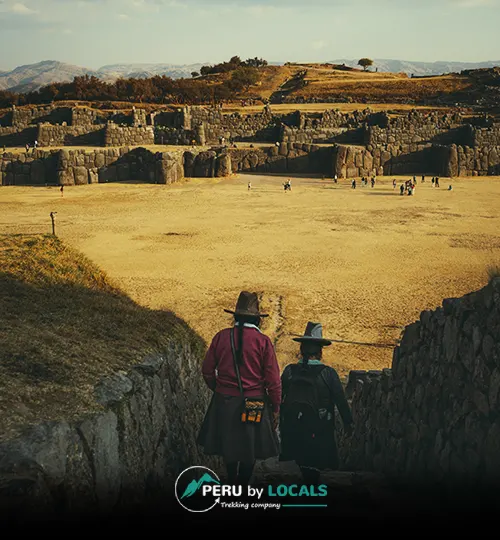
1. The Zig-Zag Megalithic Walls
Arranged across three distinct levels rising nearly 60 feet (18 meters), these walls stretch in a rhythmic zig-zag layout mimicking lightning (Illapa, the Inca god of thunder and rain). The architectural design forced attackers attempting to scale the walls to expose their flanks to defenders positioned on the adjacent jutting points.
2. The Three Tower Foundations (Muyuccmarca)
At the crown of the citadel stood three monumental defensive and ceremonial towers: Sallacmarca, Paucarmarca, and the famous circular tower of Muyuccmarca. Today, visitors can clearly see the concentric stone foundations and complex subterranean water channels of Muyuccmarca, which once rose four stories high and held clean drinking water for hundreds of Inca warriors.
3. The Inca Throne (K'usilluc Jink'ina)
Carved directly into the natural diorite outcrop known as Rodadero on the opposite side of the grand esplanade, the Trono del Inca features smooth, symmetrical stone seats and polished ceremonial platforms. Inca emperors sat here surrounded by high priests to oversee imperial military parades and celestial rituals. Modern archaeoastronomers have documented that the throne precisely aligns with the rising sun during the winter solstice.
4. The Chincanas (Secret Tunnels)
The surrounding limestone bedrock is honeycombed with natural and modified caves called Chincanas (Quechua for "place where one gets lost"). The Chincana Chica (Small Tunnel) is open for travelers to crawl through with a flashlight. The legendary Chincana Grande is strictly sealed off with iron grates following historical reports of explorers disappearing into its unmapped underground maze, which according to local myth linked Sacsayhuamán to the Coricancha in Cusco.
5. The Rodadero (Suchuna Rock Slide)
Just behind the Inca Throne lies the Rodadero, a natural geological formation of diorite stone with smooth, polished grooves created by ancient volcanic pressure. For centuries, Cusqueño children and visiting travelers have used this as a natural rock slide—a joyful, time-honored tradition!
5. Visiting Sacsayhuamán in 2027: Tickets, Hours & Logistics
Planning your visit to Sacsayhuamán requires having the official entrance ticket in hand. Review our comprehensive Cusco Tourist Ticket Guide for detailed purchasing locations.
No Individual Tickets: You cannot purchase a single ticket solely for Sacsayhuamán at the entrance gate. You must buy the Boleto Turístico del Cusco (BTC):
- Full 10-Day Ticket (Boleto Integral): 130 Soles (~$35 USD). Covers 16 premier attractions including Sacsayhuamán, Q'enqo, Puka Pukara, Tambomachay, Pisac, Ollantaytambo, Chinchero, and Moray.
- Circuit 1 Partial Ticket (1 Day): 70 Soles (~$19 USD). Valid for 1 day, covering the 4 nearby Cusco ruins: Sacsayhuamán, Q'enqo, Puka Pukara, and Tambomachay.
Opening Hours & How to Get There
- Operating Hours: Open daily, Monday through Sunday, from 7:00 AM to 5:30 PM.
- By Taxi: 10 to 15 minutes from the historic center. Cost is approximately 10 to 15 Soles ($3–4 USD).
- On Foot: A scenic, steep walk from the Plaza de Armas up Suecia or Resbalosa streets past the San Cristóbal church mirador. Takes approximately 30 to 45 minutes. Wear sturdy walking shoes!
- On a Guided Tour: The easiest and most informative way to visit is on our Cusco City Tour Full Day, which includes comfortable private transportation, an expert licensed local guide, and visits to Coricancha, Q'enqo, Puka Pukara, and Tambomachay.
6. Sacsayhuamán & The Grand Festival of Inti Raymi
Every year on June 24, Sacsayhuamán serves as the grand climax for the most celebrated festival in the Andes: Inti Raymi (The Festival of the Sun). Coinciding with the Southern Hemisphere's winter solstice, more than 800 actors dressed in authentic Inca textiles reenact the ancient solar ceremony on the central esplanade.
The Inca emperor addresses the sun god, an invocation to Pachamama is performed, and ancestral dancers fill the valley with vibrant music. Reserved grandstand tickets at Sacsayhuamán must be booked months in advance. Learn everything about seats, dates, and tips in our complete Inti Raymi Festival Cusco Guide.
7. Practical Visitor Tips & Acclimatization Advice
- Sun & UV Protection: At 3,700m elevation, UV radiation is fierce. Bring a wide-brimmed hat, sunglasses, and high-SPF sunscreen even when the sky looks overcast.
- Rain Gear in Wet Season: If traveling between November and April, always carry a lightweight waterproof jacket or poncho. Afternoon showers can develop quickly.
- Bring Cash in Soles: Local artisans, souvenir sellers, and beverage kiosks around the parking area do not accept credit cards. Keep small denominations of Soles handy.
- Hire an Accredited Guide: Without an expert guide, Sacsayhuamán is an impressive pile of rocks; with a knowledgeable native guide, every stone reveals 500 years of astronomical, spiritual, and military genius.
8. Frequently Asked Questions (FAQs)
What was the primary purpose of Sacsayhuamán in Inca times?
Sacsayhuamán served a dual function: it was both a formidable military fortress guarding the northern approaches to Cusco and a sacred ceremonial temple dedicated to the Sun God Inti. In urban planning, it represented the head of the sacred imperial puma that formed Cusco, housing barracks, weapons arsenals, royal apartments, and vast public plazas.
How heavy are the largest stones at Sacsayhuamán and how were they moved?
The largest limestone megaliths on the lowest zig-zag wall exceed 8.5 meters (28 feet) in height and weigh an incredible 125 to 130 metric tons. Lacking the wheel or draft animals, the Incas hauled these stones from quarries up to 35 km away using earthen ramps, tree-trunk rollers, braided grass ropes (q'oya), and the organized rotational labor of up to 20,000 workers.
Do I need the Cusco Tourist Ticket (Boleto Turístico) to enter Sacsayhuamán?
Yes. Single individual admission tickets are not sold at the gate. You must have either the Full 10-Day Cusco Tourist Ticket (Boleto Integral - 130 soles) or the 1-Day Circuit 1 Partial Ticket (70 soles), which also includes Q'enqo, Puka Pukara, and Tambomachay.
Can I walk to Sacsayhuamán from the Plaza de Armas of Cusco?
Yes! You can hike up stone staircases starting from the Plaza de Armas through the picturesque San Cristóbal neighborhood. The walk takes approximately 30 to 45 minutes. Because you will gain 230 meters of vertical elevation at 3,700m altitude, take your time and stay hydrated, or take a 10-minute taxi for around 10 to 15 soles.
What is the mystery of the Chincanas (underground tunnels) at Sacsayhuamán?
The Chincanas are a network of subterranean limestone tunnels and caves carved beneath the fortress. Longstanding Andean legend claims they once linked Sacsayhuamán directly to the Coricancha in downtown Cusco. The Chincana Chica is open for visitors to crawl through, while the larger Chincana Grande is permanently closed off with security grates for visitor safety.
Who was Cahuide and what happened at the tower of Muyuccmarca in 1536?
During the 1536 Siege of Cusco, the Spanish counter-attacked and cornered the Inca defenders on the upper circular tower of Muyuccmarca. An Inca warrior nobleman popularly known as Cahuide (Titu Cusi Huallpa) fought ferociously to the end. Refusing to be taken prisoner by the Spanish, he wrapped his cloak around himself and leapt to his death from the top of the tower, cementing his status as an immortal symbol of Andean courage.
9. Conclusion & Planning Your Guided Cusco Adventure
Sacsayhuamán stands as an enduring testament to the architectural genius, spiritual vision, and indomitable courage of the Inca civilization. Walking along its towering limestone walls, sliding down the Rodadero, and looking out over the red-tiled roofs of Cusco is an unforgettable highlight of any Peruvian journey.
To experience Sacsayhuamán with deep historical context, skip the logistical hassles, and explore alongside the neighboring ruins of Q'enqo, Puka Pukara, and Tambomachay, book our City Tour in Cusco. At Peru by Locals, our passionate certified guides bring ancient stones to vibrant life!


