
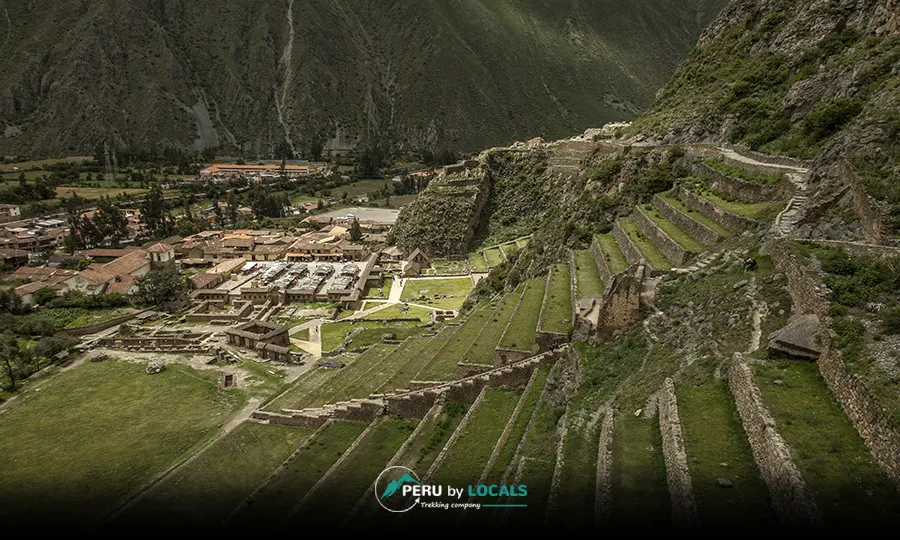
Nestled dramatically between sheer vertical Andean cliffs in the western reaches of Peru's Sacred Valley of the Incas, Ollantaytambo is an awe-inspiring destination that transcends being merely a transit stop on the train route to Machu Picchu. Renowned globally as the "Living Inca Town" (Ciudad Inca Viviente), Ollantaytambo is the only surviving pre-Columbian settlement where locals still reside inside original 15th-century stone residential compounds (*canchas*), with fresh glacial water flowing uninterrupted through street canals engineered by the Incas. As an essential highlight of our handcrafted Sacred Valley Tour Full Day and Sacred Valley VIP Tour, Peru by Locals invites you to uncover the epic history, towering sun temples, and vibrant living traditions of this legendary Inca stronghold.
The Ultimate Sacred Valley Travel Hack: Don't just rush through Ollantaytambo on a hurried afternoon bus tour! Stay overnight in the village before heading to Machu Picchu. Because Ollantaytambo sits at 2,792 meters (9,160 feet)—over 600 vertical meters lower than Cusco—it offers vastly superior oxygen levels, allowing you to sleep soundly and acclimatize without altitude sickness. Even better: once the tourist tour buses depart at 4:00 PM, you get the tranquil cobblestone streets, floodlit ruins, and artisan plazas virtually all to yourself!
| Parameter | Ollantaytambo Detail | Traveler Relevance |
|---|---|---|
| Altitude | 2,792 m / 9,160 ft above sea level | Significantly lower than Cusco (3,400 m); excellent for early acclimatization |
| Distance from Cusco | 60 km (37 miles) northwest (~1.5 to 2 hours drive) | Connected via scenic paved highways through Chinchero and Urubamba |
| Train Terminal | Primary railway gateway to Aguas Calientes | 1 hr 40 min scenic ride to Machu Picchu via PeruRail and Inca Rail |
| Trek Starting Points | Gateway to Km 82 & Km 104 | Trailhead for the Classic Inca Trail and Short Inca Trail |
| Required Ticket | Boleto Turístico del Cusco (BTC) | General (S/. 130) or Partial Circuit 3 (S/. 70); Pinkuylluna hike is FREE |
| Archaeological Opening Hours | Monday to Sunday: 7:00 AM – 5:00 PM | Open 365 days a year; mornings before 9:30 AM are best to beat tour crowds |
- 1. Overview of Ollantaytambo: The Living Inca Town
- 2. History & Origins: From Imperial Estate to Manco Inca's Victory
- 3. What to See in the Main Archaeological Fortress
- 4. Pinkuylluna Qolqas: Free Inca Mountain Granaries Hike
- 5. Cachicata Stone Quarry & The "Tired Stones"
- 6. Exploring the Living Town: Canchas, Water Channels & Plaza
- 7. Best Time to Visit & Traditional Festivals
- 8. How to Get to Ollantaytambo & Train Logistics
- 9. Entrance Fees & Boleto Turístico Details
- 10. Where to Stay in Ollantaytambo (Top Accommodation Picks)
- 11. Interactive Packing Checklist for Ollantaytambo
- 12. Frequently Asked Questions (FAQs)
- 13. Conclusion & Planning Your Journey with Peru by Locals
1. Overview of Ollantaytambo: The Living Inca Town
Perched at the strategic confluence of the Patacancha and Urubamba rivers, Ollantaytambo (pronounced oy-yahn-tie-tahm-bo) served as one of the most vital civic, agricultural, religious, and military bastions in the entire Inca realm. Situated at an elevation of 2,792 meters (9,160 feet), it marks the dramatic geographic transition where the broad, fertile Sacred Valley begins to narrow into the steep, jungle-cloaked canyon of the Urubamba River.
What makes Ollantaytambo universally unique is its urban layout. While the magnificent hilltop fortress draws photographers from every continent, the colonial town below was constructed directly on top of the original Inca urban grid. The town is divided into four distinct ayllu blocks (such as the Qosqo Ayllu and Araqama Ayllu). Each block consists of walled multi-family stone courtyards (canchas) accessed through monumental double-jamb trapezoidal doorways.
Along the cobblestone sidewalks, stone gutters known as acequias still channel crystalline alpine water straight from high glacial streams to every neighborhood. Walking through these alleys at dawn or dusk feels like stepping back 500 years into the heart of the Inca Empire.
2. History & Origins: From Imperial Estate to Manco Inca's Victory
Linguistic and archaeological research reveals that the name "Ollantaytambo" has dual roots. In the ancient Aymara tongue, it translates roughly to "The Place to Look Down," describing the vantage point from its high clifftops. In Quechua folklore, it translates to "The Storehouse / Inn of Ollanta." According to the immortal 18th-century Quechua drama Ollantay, a legendary general named Ollanta dared to fall in love with Princess Cusi Coyllur, the daughter of Emperor Pachacuti. Defying imperial law prohibiting marriages between royalty and commoners, Ollanta led an uprising and established his rebel military headquarters on this mountain redoubt.
Historically, around the mid-15th century, the visionary 9th Inca emperor Pachacuti conquered the valley, claiming Ollantaytambo as his private royal estate (*panaca*). Pachacuti ordered the leveling of the valley floor, the redirection of the riverbeds, and the construction of massive terraced agricultural amphitheaters, high palaces, and an uncompleted ceremonial Sun Temple atop the mountain.
The Battle of Ollantaytambo (1537): A Resounding Inca Triumph
Ollantaytambo holds a legendary place in South American military history as the site of one of the very few pitched battles where indigenous warriors decisively defeated Spanish conquistadors on horseback.
In 1536, following the failure of his heroic siege to retake Cusco, the rebel emperor Manco Inca retreated down the Sacred Valley with thousands of loyal warriors and established his frontline fortress at Ollantaytambo. In January 1537, a formidable Spanish force of 100 cavalry, 30 infantry, and thousands of native anti-Inca allies led by Hernando Pizarro marched on the stronghold to crush the rebellion once and for all.
Manco Inca deployed a brilliant tactical maneuver. Stationing archers and slingers across the steep, inaccessible terraces, the Incas unleashed a barrage of arrows, boulders, and javelins. Concurrently, Manco Inca ordered the opening of pre-engineered hydraulic sluice gates, diverting water from the Patacancha and Urubamba rivers to flood the flat valley floor below. The Spanish warhorses immediately sank into deep, churning mud, rendering their cavalry charges useless. Caught in a lethal crossfire, Pizarro was forced to sound a chaotic, humiliating retreat back to Cusco.
Knowing that the Spanish would soon return with overwhelming reinforcements and artillery, Manco Inca made the strategic decision to abandon Ollantaytambo later that year, retreating deep into the Amazonian cloud forests of Vilcabamba, where the Neo-Inca State resisted for another 35 years.
3. What to See in the Main Archaeological Fortress
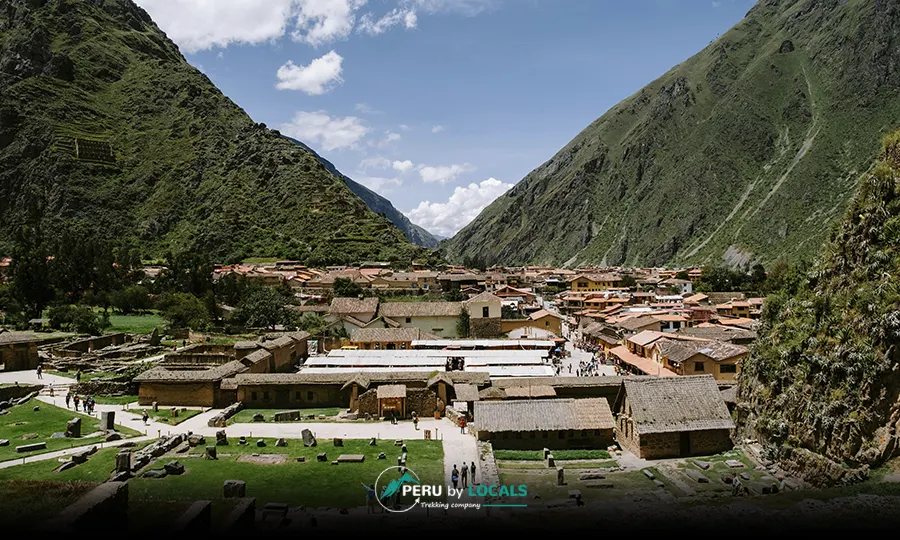
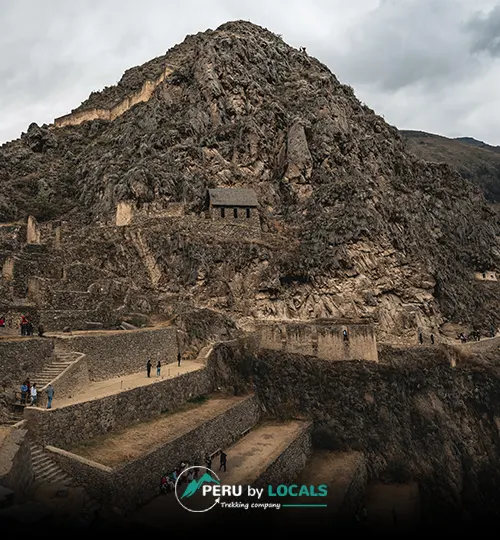
The primary archaeological park of Ollantaytambo is an extraordinary masterpiece of monumental stone architecture climbing up a rocky spur overlooking the valley. As you enter through the lower plaza and ascend more than 200 stone steps up the agricultural terraces, you will discover these signature landmarks:
A. The Sun Temple (Templo del Sol) & The Wall of the Six Monoliths
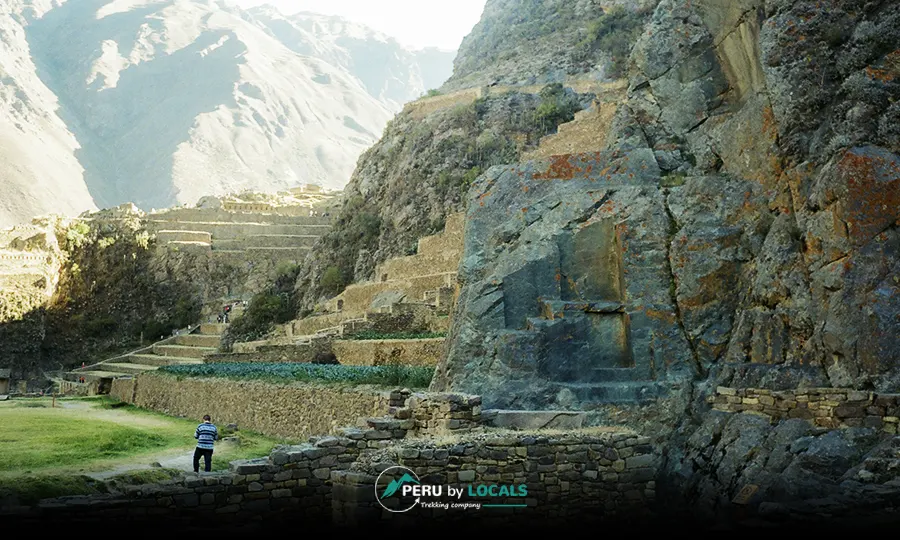
The crowning jewel of Ollantaytambo sits at the very apex of the fortress. Here stands the world-famous Wall of the Six Monoliths (Muro de los Seis Monolitos), consisting of six colossal slabs of red-pink porphyry granite standing over 4 meters (13 feet) tall and weighing an estimated 50 to 90 metric tons each.
Between each giant monolith, Inca stonemasons inserted narrow, finely polished stone fillets with razor-sharp joints so tight that a razor blade cannot be slipped between them. On the face of the fourth monolith, faint carvings of the sacred Andean stepped cross—the Chacana—remain visible. Because unfinished blocks lie scattered around the temple terrace, archaeologists believe the temple was still under active construction when the Spanish invasion interrupted imperial life.
B. The Main Gate & Temple of the Ten Niches
Before entering the upper ceremonial courtyard, you pass through the monumental Main Gate, which leads to the Temple of the Ten Niches (Templo de las Diez Hornacinas). This cyclopean wall features ten perfectly carved trapezoidal niches designed to house sacred golden idols, mummies of revered royal ancestors, and ceremonial offerings. Part of the rear wall was knocked down during Spanish assaults, but the sheer precision of the remaining granite blocks is breathtaking.
C. The Ñusta’s Bath (Baño de la Ñusta) & Ceremonial Water Fountains
At the base of the fortress, in the sector known as Incamisana, lies the Ñusta’s Bath (El Baño de la Ñusta). This exquisitely sculpted granite fountain channels pure mountain spring water through a carved stone spout into a ceremonial basin. In Inca spiritual cosmology, water was revered as Unu, a sacred purifying fluid linking the upper world to the underworld. The fountain demonstrates the pinnacle of Inca hydraulic engineering, maintaining an uninterrupted, symmetrical water stream for over half a millennium.
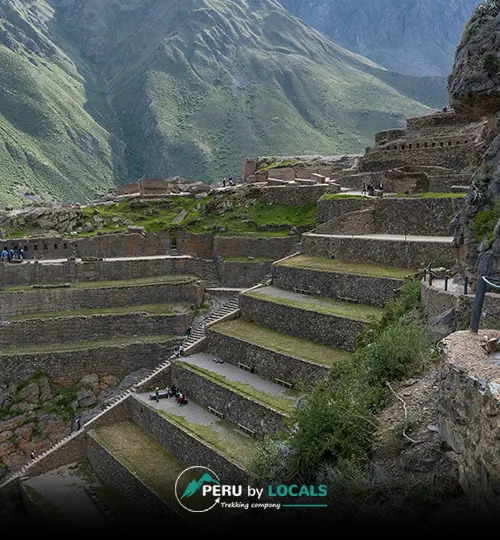
D. The Monumental Terraces (Andenes)
The terraces of Ollantaytambo are far taller and more massive than typical agricultural terraces found across the Andes. Reinforced with high stone walls and backfilled with layered drainage gravel, they served a dual purpose: providing high-yield agricultural microclimates for cultivating prized imperial corn, while simultaneously functioning as formidable defensive ramparts against invaders ascending the valley.
4. Pinkuylluna Qolqas: Free Inca Mountain Granaries Hike
If you look directly across the valley from the main fortress toward the sheer mountain face towering over the town, you will spot several multi-story stone structures clinging dramatically to the vertical cliffs. These are the Pinkuylluna Qolqas—the imperial Inca storage storehouses.
Why hike Pinkuylluna?
- Completely Free Entry: Unlike the main fortress, the Pinkuylluna hike does not require the Cusco Tourist Ticket (BTC). The trailhead is marked at the end of Calle Lares in the old town.
- Natural Air Conditioning: Built on the windy mountain ridge to capture cold alpine air updrafts and lower humidity, these granaries naturally refrigerated and preserved metric tons of dried potatoes (chuño), dehydrated llama meat (ch'arki), and maize to supply the Inca army.
- The Carved Face of Tunupa (Viracocha): On the rocky crags adjacent to the storehouses, look closely at the cliff profile. Natural geology combined with subtle Inca rock-sculpting reveals the towering silhouette of an Andean bearded deity—believed to be Tunupa or Viracocha, the god of wisdom and creation—gazing protectively down across Ollantaytambo.
- Duration: 45 to 60 minutes of steep uphill hiking rewarded with the single most spectacular panoramic viewpoint of the entire archaeological fortress and town layout.
5. Cachicata Stone Quarry & The "Tired Stones"
One of the greatest architectural mysteries of Ollantaytambo is how the Incas transported the monumental 50-ton pink granite monoliths across a raging mountain river. The answer lies at the Cachicata Stone Quarry (Las Canteras de Cachicata), located high on the mountainside on the opposite (southern) bank of the Vilcanota River, approximately 6 kilometers away.
Inca quarrymen split the granite from natural bedrock using bronze chisels, wooden wedges soaked in water to crack the stone, and stone mauls. They then slid the giant blocks down steep earthen ramps, ferried them across the braided river channels during the low-water dry season, and pulled them up an enormous inclined earthen ramp to the summit of the fortress using heavy ropes, rollers, and the coordinated manpower of thousands of workers.
Along the trail to Cachicata, you can still observe dozens of colossal megaliths abandoned mid-transit. Known as the "Tired Stones" (Piedras Cansadas), these megaliths were left frozen in time when construction halted abruptly during the Spanish invasion. Travelers interested in an uncrowded alpine hike can explore this sector on our Soqma & Quarry Trail 3D/2N excursion.
6. Exploring the Living Town: Canchas, Water Channels & Plaza
After descending from the ruins, spend at least a couple of hours getting lost in the cobblestone streets of the old town:
- The Plaza de Armas: A lively town square framed by colonial balconies, local artisan stalls selling alpaca textiles, and cozy cafes serving locally grown Sacred Valley specialty coffee and craft beer.
- The Qosqo Ayllu Sector: Located southeast of the plaza, this grid retains its authentic Inca stone walls, trapezoidal entryways, and domestic courtyards where local families raise guinea pigs (cuy) and weave traditional textiles.
- The Traditional Artisan Market: Located in the plaza right outside the ticket gate of the ruins, this colorful bazaar features handwoven ponchos, silver jewelry, ceramics, and musical instruments. Remember to bargain politely and kindly!
- Nearby Native Communities: Just 45 minutes up the Patacancha Valley above Ollantaytambo lies the indigenous community of Willoq, renowned for its master Quechua weavers wearing vivid red ponchos who preserve direct ancestral lineages from the Inca Empire.
7. Best Time to Visit & Traditional Festivals
Thanks to its comfortable sub-tropical valley elevation (2,792 m), Ollantaytambo enjoys pleasant temperatures year-round, with daytime highs consistently reaching 19°C to 23°C (66°F to 73°F).
Dry Season (May to October) — Ideal for Touring and Treks
Sunny blue skies, crisp mountain air, and virtually zero rainfall make this the peak travel season. It is the best period for climbing the stone staircases, hiking Pinkuylluna or Cachicata, and taking open-roof scenic trains to Machu Picchu. Nights are cool (5°C to 8°C / 41°F to 46°F), so bring a warm fleece or sweater.
Rainy Season (November to April) — Emerald Green Scenery
Showers occur mostly in the afternoons, leaving mornings clear and crisp. The surrounding mountains burst into lush, emerald green vegetation with rushing waterfalls cascading down the valley walls. Trails can be slippery, so sturdy footwear is essential.
Key Festivals to Experience:
- Fiesta del Señor de Choquekillka (May/June - Pentecost): Ollantaytambo's patron saint festival, spanning four days of non-stop colorful street parades, costumed Quechua dance troupes, brass bands, and traditional feasts.
- Ollantay Raymi (Late June): A grand theatrical re-enactment of the ancient drama of General Ollantay and Princess Cusi Coyllur performed by hundreds of actors directly upon the terraces of the fortress ruins.
8. How to Get to Ollantaytambo & Train Logistics
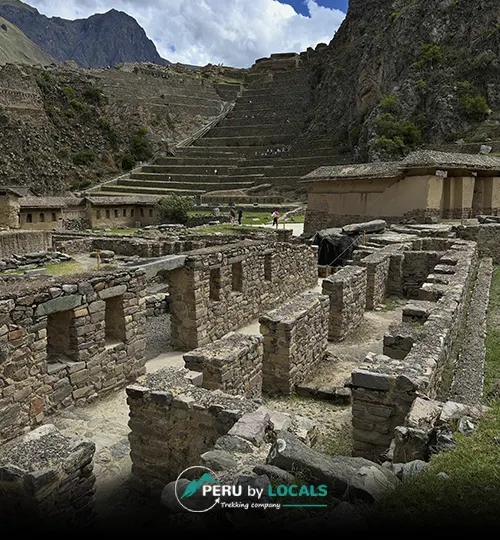
Ollantaytambo is located 60 kilometers (37 miles) northwest of Cusco. Getting here is straightforward:
- All-Inclusive Guided Tour with Peru by Locals: The most enriching, stress-free approach. Our Sacred Valley Tour Full Day or Sacred Valley VIP Tour covers Pisac, Moray, Maras Salt Mines, and Ollantaytambo in private transport with certified bilingual native guides. We can also drop you off directly at the Ollantaytambo train station at the end of the tour for your evening train to Machu Picchu!
- Shared Minivan (Colectivo) from Cusco: Departs continuously throughout the day from Calle Pavitos in Cusco. The one-way fare is approximately 10 to 15 PEN ($3 to $4 USD) per person, taking 1.5 to 2 hours.
- Private Taxi / Transfer: A private taxi from Cusco to Ollantaytambo costs roughly 100 to 140 PEN ($27 to $38 USD), offering the flexibility to stop for photos along the way.
Taking the Train to Machu Picchu from Ollantaytambo
The Ollantaytambo Train Station (Estación de Trenes) is located at the southern edge of town, about a 10-minute walk or a quick 3-sol mototaxi ride from the main square. Both PeruRail and Inca Rail operate multiple service classes from this station to Aguas Calientes (Machu Picchu Pueblo):
- Standard Tourist Class: PeruRail Expedition / Inca Rail The Voyager (comfortable seats, large panoramic side windows).
- Panoramic Vista Class: PeruRail Vistadome / Inca Rail The 360° (overhead skylight windows, audio commentary, traditional snacks, and live onboard folklore dance shows).
- Luxury Class: Belmond Hiram Bingham / Inca Rail The First Class (gourmet dining, live acoustic music, bar car, and open observation decks).
9. Entrance Fees & Boleto Turístico Details
Entry to the primary archaeological fortress of Ollantaytambo is managed under the official Boleto Turístico del Cusco (BTC). Individual one-site entrance tickets are not sold.
- Boleto Turístico General (BTC Integral - S/. 130 PEN / ~$35 USD): Valid for 10 consecutive days and covers 16 major attractions across Cusco and the Sacred Valley (including Ollantaytambo, Pisac, Moray, Chinchero, Sacsayhuamán, and Qorikancha museum).
- Boleto Turístico Parcial - Circuito 3 (S/. 70 PEN / ~$19 USD): Valid for 2 consecutive days. Covers exclusively the 4 core Sacred Valley archaeological sites: Ollantaytambo, Pisac, Moray, and Chinchero.
- Payment Note: Tickets can be purchased at the main entrance gate in Ollantaytambo or in Cusco (Av. El Sol 103). Payment must be made strictly in cash in Peruvian Soles (PEN). Credit cards are rarely accepted at gate ticket booths.
- Free Sites: The cobblestone streets of the living town and the Pinkuylluna granary mountain hike are completely free and require no ticket!
10. Where to Stay in Ollantaytambo (Top Accommodation Picks)
Staying overnight in Ollantaytambo is a deeply rewarding experience. Accommodations cater to all budgets:
- El Albergue Ollantaytambo (Historic & Boutique): Located directly alongside the historic train platform since 1925. Features romantic gardens, an organic farm, wood-fired roasting coffee house, its own craft distillery (Destilería Andina), and daily traditional Pachamanca earth-oven lunches.
- Earth Tones (Unique & Eco-Immersive): A collection of charming, minimalist tiny homes situated in an orchard just a short 5-minute stroll from the town square, perfect for travelers seeking tranquility and modern design amidst nature.
- Tunupa Hotel (Family & Group Friendly): Situated close to the train station, offering spacious rooms, beautiful mountain views, and quiet gardens.
- Budget Hostels & B&Bs: The town features dozens of welcoming, family-run guesthouses around the Plaza de Armas and Qosqo Ayllu (e.g., Inti Killa, Hostal Iskay, KB Tambo) offering comfortable private rooms with hot showers and Wi-Fi for $25 to $50 USD per night.
11. Interactive Packing Checklist for Ollantaytambo
Use our interactive table below to prepare your daypack for exploring Ollantaytambo. Checked items save automatically in your browser:
| Packing Item | Category | Why You Need It |
|---|---|---|
| Original Physical Passport & Boleto Turístico | Documents | Mandatory for entering the fortress ruins and boarding trains to Machu Picchu |
| Cash in Peruvian Soles (Small Denominations) | Money | Ticket booths, mototaxis, local bakeries, and artisan market stalls only take cash |
| Sturdy Walking Shoes / Hiking Boots | Footwear | Climbing 200+ steep, uneven stone steps requires excellent ankle support and grip |
| Wide-Brimmed Sun Hat & Polarized Sunglasses | Sun Protection | The stone ruins radiate intense equatorial sunlight with limited tree canopy |
| High-SPF Sunscreen (SPF 50+) | Skin Care | Prevents high-altitude UV sunburn during mid-day outdoor exploration |
| Lightweight Breathable Layers & Windbreaker | Clothing | Ollantaytambo can be breezy; warm during the sunny day, cool after sunset |
| Rain Poncho or Waterproof Jacket | Weather Gear | Essential year-round for sudden afternoon clouds, especially November to April |
| Refillable Water Bottle (1 to 1.5 Liters) | Hydration | Staying hydrated keeps muscle cramps and mild altitude fatigue at bay |
| Daypack (Under 20 Liters / 5 kg) | Luggage | Complies with train baggage limits if continuing directly to Machu Picchu |
12. Frequently Asked Questions (FAQs)
Do I need the Cusco Tourist Ticket (Boleto Turístico) for Ollantaytambo Fortress?
Yes. Access to the main Ollantaytambo archaeological fortress requires the Boleto Turístico del Cusco (BTC). You can use either the 10-day Boleto General (S/. 130 PEN, covering 16 sites) or the 2-day Partial Circuit 3 Ticket (S/. 70 PEN, covering Ollantaytambo, Pisac, Moray, and Chinchero). Individual tickets for just Ollantaytambo are not sold.
Is the Pinkuylluna mountain granary hike free to visit?
Yes! The steep hike to the Pinkuylluna Inca storage houses (qolqas) across the valley from the main fortress is completely free and does NOT require the Boleto Turístico. The trailhead is accessed from Calle Lares inside the old town grid.
Why is Ollantaytambo called the "Living Inca Town"?
Ollantaytambo is the only surviving pre-Columbian urban center where the original 15th-century Inca town grid (canchas), narrow cobblestone alleys, stone trapezoidal doorways, and fresh water channels (acequias) remain continuously inhabited and operational today.
How do I take the train to Machu Picchu from Ollantaytambo?
Ollantaytambo train station is the primary rail terminal connecting Cusco to Aguas Calientes (Machu Picchu Pueblo). Trains operated by PeruRail (Expedition, Vistadome, Hiram Bingham) and Inca Rail (Voyager, 360°, First Class) depart throughout the day, taking approximately 1 hour and 40 minutes.
What is the altitude of Ollantaytambo and does it help with acclimatization?
Ollantaytambo sits at 2,792 meters (9,160 feet) above sea level—significantly lower than Cusco (3,400 m). Spending your first night or two in Ollantaytambo is one of the best strategies to acclimatize smoothly, sleep deeply, and avoid acute altitude sickness (soroche).
Can I store luggage in Ollantaytambo while traveling to Machu Picchu?
Yes. Because train companies enforce strict baggage limits (approx. 5 kg / 11 lbs per passenger on standard tickets), most hotels and hostels in Ollantaytambo provide secure luggage storage for guests returning after their Machu Picchu excursion. There are also private luggage storage lockers near the train station.
13. Conclusion & Planning Your Journey with Peru by Locals
From the colossal granite slabs of the Sun Temple to the whisper of glacial waters flowing down ancient cobblestone alleyways, Ollantaytambo is vastly more than a waypoint on the road to Machu Picchu—it is the beating heart of living Inca civilization. Standing atop its monumental terraces, looking out across the valley where Inca warriors once defended their homeland, is an experience that resonates deeply with every traveler.
Whether you wish to experience Ollantaytambo on a comprehensive Sacred Valley Tour Full Day, embark on our multi-day Sacred Valley + Machu Picchu 2D/1N package, or begin your trek on the Classic Inca Trail, Peru by Locals is committed to delivering an unforgettable, personalized journey led by certified native guides who call these mountains home.

Contact our travel specialist Jose Condor
"With my experience and passion for tourism, I will guide you to discover the unique attractions of Cusco, helping you plan an unforgettable vacation full of history and adventure."
Call me: +51 989 585 967


