
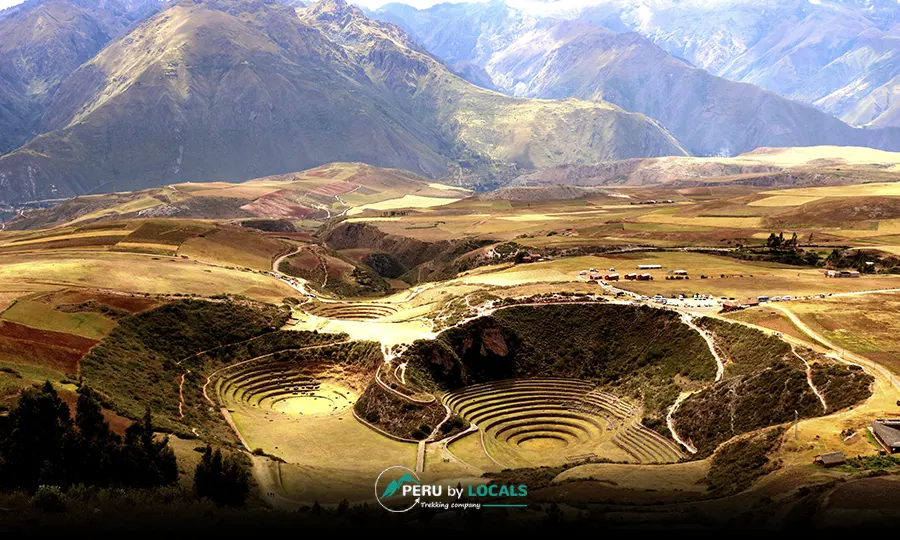
Located in the high plateau of the breathtaking Sacred Valley of the Incas, Moray is one of the most enigmatic and visually captivating archaeological wonders in Peru. Unlike typical Inca citadels or mountain fortresses, Moray resembles a series of colossal, sunken green amphitheatres carved into the earth. Its complex, concentric circular terraces have fascinated archaeologists, botanists, historians, and world travelers for generations. Whether you are exploring on a comprehensive Sacred Valley VIP Tour or pairing your visit with the shimmering Maras Salt Mines, this complete 2027 visitor's guide explores the true history of Moray, the compelling theories behind its ancient purpose, ticket logistics, altitude precautions, and insider tips to maximize your journey.
Lighting and Crowd Strategy: To experience Moray at its most mystical, visit either between 8:00 AM and 9:30 AM before tour buses arrive from Cusco, or late in the afternoon between 3:00 PM and 4:30 PM. The low afternoon sun casts long, dramatic shadows across the concentric curved walls of the largest amphitheatre (Q'echuyoq), highlighting the intricate stone masonry and framing snow-dusted Andean giants like Mount Verónica and Chicón against crystalline blue skies!
| Key Feature | Detail / Specification | Traveler Insight |
|---|---|---|
| Altitude | 3,500 m / 11,483 ft above sea level | Slightly higher than Cusco (3,400 m); take a gentle walking pace |
| Geographical Location | Maras High Plateau, Sacred Valley, Cusco | 53 km (33 miles) northwest of Cusco (~1.5 hours drive) |
| Depression Depth | 150 meters (490 feet) maximum depth | Creates up to 15°C (27°F) temperature variance from top to bottom |
| Largest Amphitheater | Q'echuyoq (~180 m / 600 ft diameter) | Composed of 12 circular terrace levels with stone drainage |
| Required Ticket | Boleto Turístico del Cusco (BTC) | BTC General (S/. 130) or Partial Circuit 3 (S/. 70); cash only at gates |
| Opening Hours | Monday to Sunday: 7:00 AM – 5:00 PM | Open every day of the year including national holidays |
- 1. Introduction to the Ruins of Moray
- 2. Theories Behind the Purpose of Moray
- 3. History of Moray: From Wari Roots to Aerial Rediscovery
- 4. What to See at Moray: Key Architectural Features
- 5. The Best Time to Visit Moray & Weather Insights
- 6. Weather & Altitude Considerations (Acclimatization Tips)
- 7. How to Get to Moray from Cusco
- 8. Additional Attractions Near Moray (Maras, Chinchero & Beyond)
- 9. Tickets & Cusco Tourist Ticket (Boleto Turístico)
- 10. What to Bring: Interactive Packing Checklist
- 11. Frequently Asked Questions (FAQs)
- 12. Conclusion & Booking Your Moray Experience
1. Introduction to the Ruins of Moray
Perched high on the windswept Maras plateau of the Peruvian Andes, the Ruins of Moray (often spelled Muray in Quechua) represent one of the pinnacle engineering marvels of pre-Columbian South America. While most visitors to Cusco explore the imperial fortresses of Sacsayhuamán or the sun temple at Coricancha, Moray offers a strikingly different perspective on the Andean mind: an intimate, scientific symbiosis with ecology and agriculture.
The archaeological complex consists of three primary clusters of concentric circular terraces locally known as muyus. The depressions descend to staggering depths of up to 150 meters (490 feet) below the surrounding plateau. The grandest and most photogenic of these amphitheaters, known as Q'echuyoq, boasts an outer diameter of approximately 180 meters (nearly 600 feet) across its upper rim, comprising twelve tiers of curving stone-reinforced retaining walls.
Framed by the towering glaciated peaks of the Vilcanota and Urubamba mountain ranges—including snow-capped Mount Chicón and Verónica—the geometric symmetry of Moray emerging from the golden Andean plateau creates a landscape that is both profoundly peaceful and intellectually awe-inspiring.
2. Theories Behind the Purpose of Moray
Because the Inca civilization did not utilize a written alphabetic script, relying instead on oral traditions and complex knotted string cords called quipus, the exact operational function of Moray has ignited passionate debate among archaeologists, anthropologists, and agronomists. Over decades of excavation, field research, and folk legend, four principal theories have emerged:
A. Agricultural Research & Microclimate Laboratory (The Leading Scientific Theory)
By far the most widely accepted and rigorously substantiated hypothesis is that Moray functioned as an open-air agricultural research and acclimatization station. In the 1970s and 1980s, anthropologist John Earls conducted groundbreaking thermal studies across the site. Using sensitive temperature sensors, Earls documented that the deepest bowl of Moray generates a remarkable vertical temperature differential of up to 15°C (27°F) between the top terrace and the bottom floor!
Each terrace level absorbs varying degrees of solar radiation and wind exposure depending on its depth, curved orientation, and the thermal mass of its volcanic and limestone masonry walls. By day, the stone walls absorb the blazing equatorial sun; by night, they slowly radiate that trapped warmth back into the soil, protecting delicate crops from biting Andean frost. Furthermore, soil analyses reveal that the Incas imported diverse fertile topsoils from various regions of the empire—including rich organic loam from the cloud forest jungle (Antisuyu) and the coastal valleys.
By methodically moving plant specimens from terrace to terrace over several generations, Inca agronomists could domesticate wild varieties and adapt low-altitude crops—such as high-yield maize, quinoa, medicinal herbs, and varieties of the sacred coca leaf—to thrive in the harsher, colder altitudes of the Andean highlands.
B. Inca Ceremonial Center & Cosmological Amphitheater
A complementary theory posits that Moray served as a monumental religious sanctuary dedicated to fertility, water rituals, and cosmic worship. The circular, concave geometry of the muyus evokes the womb of Pachamama (Mother Earth), symbolizing the feminine regenerative power of the earth.
The exceptional natural acoustics within the bowls—where a soft whisper spoken at the center can be heard clearly along the upper terraces—suggests that Moray served as a ceremonial theater for sacred music, astronomical observations, and communal offerings. This living spiritual connection endures today: every October, indigenous families from nearby communities gather at the site to celebrate Moray Raymi, an authentic harvest and earth-reverence festival featuring traditional Quechua dancers, pan flutes, and ancestral rites.
In traditional Andean cosmology, the universe is divided into three sacred realms: the Hanan Pacha (the celestial upper world of the sun and stars), the Kay Pacha (this earthly realm of humans, animals, and plants), and the Uku Pacha (the sacred subterranean underworld of ancestors and seed germination). To Inca priests, descending into the concentric rings of Moray was a literal physical communion with the Uku Pacha—placing seeds directly into the deepest heart of Mother Earth to ensure imperial agricultural abundance.
C. Ancient Open-Pit Mine Repurposed into Terraces
Geological research indicates that Moray is situated within a karstic limestone formation susceptible to natural subterranean sinkholes (known geologically as dolinas). Some researchers suggest that before the Incas, pre-Inca cultures or early miners may have excavated mineral deposits or clay from these natural collapses. Rather than abandoning the hollows, Inca master architects stabilized the unstable collapsing sinkholes by lining them with monumental concentric retaining walls, transforming potential geological hazards into an agricultural and hydraulic masterpiece.
D. Extraterrestrial Landing Site & Energetic Vortexes (Modern Lore)
Due to Moray's uncanny aerial resemblance to modern crop circles and its flawless circular geometry, alternative theorists and new-age travelers frequently speculate that the complex was designed as an ancient cosmic landing pad or navigation marker for extraterrestrial beings. While completely unsupported by archaeological evidence, this myth adds an entertaining aura of intrigue. Today, many spiritual seekers and sound healers visit Moray to meditate along the rim, drawn by the site's palpable energetic tranquility and cosmic resonance.
3. History of Moray: From Wari Roots to Aerial Rediscovery
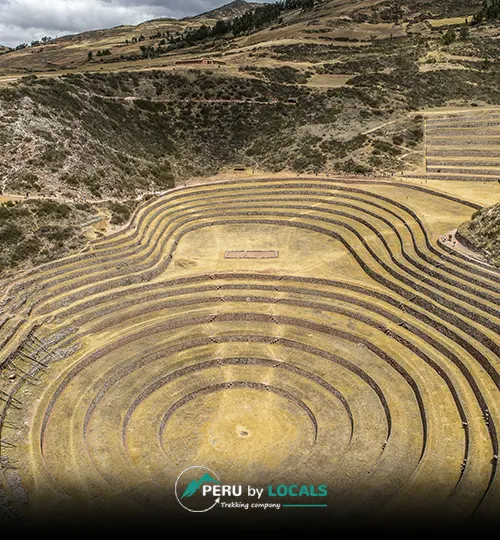
The chronological timeline of Moray spans well over a millennium. Archaeological excavations conducted across the Maras plateau indicate that the area was inhabited long before the rise of the Inca dynasty. Ceramic shards and architectural foundations suggest that the Wari Empire (which dominated the Peruvian central highlands from approximately 600 to 1000 CE) established initial settlements and early terracing around Moray.
During the zenith of the Inca Empire between the 12th and mid-15th centuries—particularly during the transformative reigns of the 9th Inca emperor Pachacuti and his successor Topa Inca Yupanqui—the site was dramatically engineered, expanded, and fortified. The Incas overlaid precision masonry, state-of-the-art hydraulic conduits, and layered drainage beds onto the existing depressions.
How Moray Was Reintroduced to the World
Following the Spanish conquest in the 1530s, Moray fell off the colonial radar. Hidden on a secluded plateau several miles away from the main Spanish royal road through Urubamba, the site escaped the widespread stone quarrying and religious destruction suffered by sites closer to Cusco. For centuries, Quechua-speaking farmers from the neighboring indigenous hamlet of Misminay quietly cultivated the terraces with traditional barley, potatoes, and beans.
Moray remained virtually unknown to international archaeology until 1931, when American geographer Robert Shippee and aviator George Johnson flew an aerial photographic expedition over the Andes. From their biplane cockpit, they captured breathtaking aerial photographs of three giant green concentric circular depressions cut into the high plateau. The published photographs electrified the academic world, sparking modern scientific expeditions and paving the way for the site's protection by Peru's National Institute of Culture (INC, now the Ministry of Culture) in the 1970s.
4. What to See at Moray: Key Architectural Features
When exploring the archaeological park today, make sure to take your time walking the designated perimeter trails to examine these outstanding engineering highlights:
- The Three Distinct Muyus (Amphitheaters): The site features three amphitheaters: Q'echuyoq (the grandest amphitheater with 12 tiers), Simapata (a secondary complex positioned slightly higher), and Intiwatana / K'uychi Muyu (a smaller, highly ceremonial circular group). Walking the scenic rim trail between them offers ever-changing vantage points for panoramic photography.
- The "Flying Stairs" (Sarunas): Rather than building projecting exterior staircases that would interrupt the circular symmetry of the terraces, Inca stonemasons embedded flat, cantilevered stone slabs directly into the face of the vertical retaining walls. Known as sarunas or "flying steps," these stones allowed Inca farmers to easily climb from one terrace tier to the next.
- Ingenious Subterranean Drainage: One of Moray's greatest mysteries is why the bottom of these 150-meter-deep bowls never turns into a stagnant lake, even during the torrential rains of the Andean wet season. Excavations uncovered that beneath the topsoil, the Incas engineered deep underground drainage matrices composed of graded layers of sand, gravel, and porous limestone boulders. Stormwater percolates instantly through the terraces and drains deep into the natural subterranean aquifer, preventing waterlogging and protecting crop roots.
- Stone Irrigation Conduits: Carved stone channels line the rims and drop vertically down the terrace faces, once fed by seasonal mountain aqueducts that delivered fresh snowmelt to individual terrace levels with surgical precision.
- MIL Centro & Mater Iniciativa (Culinary Research Hub): Perched directly on the ridge overlooking Moray is MIL, the world-celebrated restaurant and research laboratory founded by Chef Virgilio Martínez (of Central in Lima, ranked #1 in the World's 50 Best Restaurants). MIL works directly with the local indigenous communities of Mullaka's-Misminay and Kacllaraccay to study ancestral Andean ingredients, tubers, wild herbs, and high-altitude fungi cultivated around Moray.
5. The Best Time to Visit Moray & Weather Insights
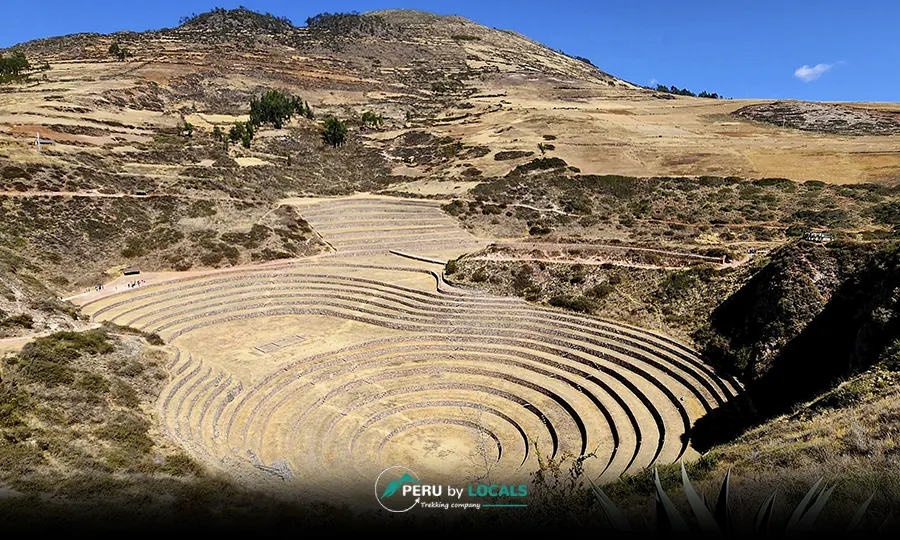
Moray experiences two distinct Andean seasons, each offering a unique visual and travel experience:
The Dry Season (May through October) — Recommended for Ideal Conditions
The dry winter season brings consistent blue skies, brilliant sunshine, and minimal rainfall. This is widely considered the best time to visit Moray, especially for travelers interested in photography, outdoor adventures like ATV quad biking across the Maras plateau, or mountain biking along the dirt backroads. Daytime temperatures are delightfully pleasant (18°C to 22°C / 64°F to 72°F). However, nighttime and early morning temperatures can plunge near freezing (0°C to 5°C / 32°F to 41°F), so warm layers are essential for early departures.
The Rainy Season (November through April) — Lush Landscapes & Serenity
During the Andean summer, rains transform the surrounding Maras plateau and the terraces of Moray into a vibrant, emerald-green paradise. While showers typically arrive in the mid-to-late afternoon, mornings are often partly sunny and refreshingly quiet. Crowds are significantly smaller, allowing you to experience the vast stillness and spiritual resonance of the ruins with few other travelers around. Just be sure to pack a reliable waterproof jacket and shoes with solid tread, as dirt perimeter paths can become slick.
6. Weather & Altitude Considerations (Acclimatization Tips)
Moray sits at an altitude of 3,500 meters (11,483 feet) above sea level on an exposed, open plain. This is slightly higher than the historic center of Cusco (3,400 m) and considerably higher than lower Sacred Valley towns like Urubamba (2,870 m) or Ollantaytambo (2,792 m). Because the site is open and windswept, the wind chill can be noticeable even when the equatorial sun is shining brightly.
Because visitors often explore Moray early in their Peru itinerary, mild symptoms of altitude sickness (soroche)—such as lightheadedness, mild shortness of breath when climbing the perimeter viewing stairs, or mild headaches—can occur. To ensure maximum comfort:
- Spend your first 1 to 2 nights relaxing in the lower altitudes of the Sacred Valley (Urubamba or Pisac) before embarking on full-day excursions.
- Sip traditional coca tea or muña (Andean mint) tea with breakfast to promote oxygen circulation.
- Drink at least 2 liters of water daily; the dry alpine mountain air dehydrates the body quickly.
- Walk at an easy, rhythmic pace along the walking circuits, and take deep breaths at scenic lookout stops.
7. How to Get to Moray from Cusco
Moray is located approximately 53 kilometers (33 miles) northwest of Cusco. Several transportation methods are available depending on your travel style:
Option A: Guided Small-Group or Private Tour (Most Recommended)
The most seamless and enriching way to visit Moray is via a guided day tour with Peru by Locals. Our Sacred Valley VIP Tour Full Day (Extended) combines Moray with the Pisac Inca Citadel, the Maras Salt Mines, the living Inca town of Ollantaytambo, and the weaving heritage of Chinchero. You travel in comfortable private transport accompanied by certified native Quechua guides who unlock the historical and botanical secrets of each site.
Option B: Adventure Quad Biking (ATVs) from Maras
For adrenaline seekers, half-day quad biking (cuatrimotos) excursions depart daily from Cusco to the Maras plateau. Riders zip across dusty Andean dirt roads with snow-capped mountain panoramas before stopping at Moray and the Maras Salt Mines.
Option C: Independent Travel via Colectivo and Taxi
Budget travelers can take a local colectivo (shared minivan) from Calle Pavitos or Calle Belenpampa in Cusco bound for Urubamba. Ask the driver to drop you off at the Ramal de Maras (the Maras highway junction, ~7 PEN, approx. 50 minutes). From the junction, hire a local taxi to take you to Moray, wait for you while you explore, and continue to the Maras Salt Mines before returning you to the main road (~60 to 80 PEN negotiated round-trip).
8. Additional Attractions Near Moray (Maras, Chinchero & Beyond)
Because a thorough visit to Moray takes between 1 and 1.5 hours, it is almost always paired with other world-class attractions situated across the high plateau:
- Maras Salt Mines (Salineras de Maras): Located just 12 km (20 minutes drive) from Moray, this awe-inspiring canyon features over 3,000 terraced pink salt pools fed by a subterranean hyper-saline thermal spring. Hand-harvested by local families since pre-Inca times, Maras salt is renowned worldwide for its gourmet mineral content.
- The Colonial Town of Maras: A tranquil, timeless Andean village famous for its intricately carved stone door lintels (portadas) dating back to the 16th and 17th centuries, representing Spanish heraldry and indigenous stonemasonry.
- Chinchero Weaving Village: Renowned as the weaving heartland of the Andes, Chinchero features master weavers demonstrating ancestral spinning, natural plant dyeing, and backstrap loom techniques, alongside monumental Inca agricultural terraces and a stunning 17th-century adobe colonial church.
- Misminay Native Community: For deep cultural immersion, visit our community partners in Misminay. Experience traditional Andean farm life, participate in an earth-oven Pachamanca feast, and observe ancient star constellations as our ancestors did.
9. Tickets & Cusco Tourist Ticket (Boleto Turístico)
Entry to Moray is regulated exclusively under the official Boleto Turístico del Cusco (BTC) issued by COSITUC. Individual tickets just for Moray are not available for purchase.
- Boleto Turístico General (BTC Integral - S/. 130 PEN / ~$35 USD): Valid for 10 consecutive days and includes 16 premier archaeological sites and museums across Cusco and the Sacred Valley (including Moray, Pisac, Ollantaytambo, Chinchero, Sacsayhuamán, Qenqo, Puka Pukara, and Tipón). Best value for travelers staying several days.
- Boleto Turístico Parcial - Circuito 3 (S/. 70 PEN / ~$19 USD): Valid for 2 consecutive days. Covers exclusively the 4 premier Sacred Valley archaeological parks: Moray, Pisac, Ollantaytambo, and Chinchero. Perfect if you only plan to tour the Sacred Valley.
- Important Note on Maras Salt Mines: The Maras Salt Mines are NOT included in the Boleto Turístico. Entrance to the salt mines requires a separate community fee of S/. 20 PEN per person paid in cash (Peruvian Soles) directly at the Maras gate.
10. What to Bring: Interactive Packing Checklist
To ensure a smooth, comfortable, and memorable visit to Moray, review our checklist of essential gear. Our interactive table automatically saves your packing progress:
| Essential Item | Category | Why It Is Crucial for Moray |
|---|---|---|
| Original Physical Passport & BTC Ticket | Documents | Required for park gate verification and stamp inspection |
| Cash in Peruvian Soles (Small Bills) | Money | For Maras Salt Mines entrance fee (S/. 20), snacks, and artisanal crafts |
| Sturdy Walking Shoes / Hiking Sneakers | Footwear | Trails consist of dirt, packed gravel, and stone steps |
| Wide-Brimmed Sun Hat & Sunglasses | Sun Protection | High-altitude UV index is intense; Moray offers virtually no shade |
| High-SPF Sunscreen & Lip Balm | Skin Care | Prevents severe sunburn in the thin alpine atmosphere |
| Layered Clothing & Windbreaker Jacket | Apparel | Mornings can be chilly and windswept, while midday gets very warm |
| Waterproof Rain Poncho (Wet Season) | Weather Gear | Crucial from November to April when sudden mountain showers occur |
| Refillable Water Bottle (1–1.5 Liters) | Hydration | Staying thoroughly hydrated combats altitude discomfort |
| Camera or Smartphone with Wide-Angle Lens | Photography | Essential to capture the sheer breadth of the concentric amphitheaters |
11. Frequently Asked Questions (FAQs)
Do I need the Cusco Tourist Ticket (Boleto Turístico) for Moray?
Yes. Access to Moray is strictly regulated via the Cusco Tourist Ticket (Boleto Turístico del Cusco). You can use the Boleto General (S/. 130 PEN, valid 10 days for 16 sites) or the Partial Circuit 3 Ticket (S/. 70 PEN, valid 2 days for Moray, Pisac, Ollantaytambo, and Chinchero). Individual one-off tickets are not sold at the gate.
Is Maras Salt Mines included in the Moray ticket?
No. The Maras Salt Mines (Salineras de Maras) are privately managed by the local indigenous community of Maras and are NOT included in the Boleto Turístico. Entrance to Salineras requires a separate fee of S/. 20 PEN per person (cash only) paid directly at the community entrance booth.
What was the real purpose of the circular terraces of Moray?
While debated, the most scientifically accepted theory is that Moray served as a sophisticated agricultural research and acclimatization laboratory. Anthropologist John Earls demonstrated that the depth and design create microclimates differing by up to 15°C (27°F) from top to bottom, mirroring 20 distinct ecological zones across the Inca Empire.
Can you walk down inside the circular terraces of Moray?
No. Since 2018, walking down into the sunken circular depressions (muyus) is strictly prohibited by Peru's Ministry of Culture to preserve the fragile limestone masonry and prevent soil erosion. Visitors can enjoy sweeping 360-degree views from designated rim pathways and viewpoints.
What is the altitude of Moray and is altitude sickness common?
Moray sits on the Maras high plateau at 3,500 meters (11,483 feet) above sea level—slightly higher than Cusco (3,400 m). Travelers not acclimatized may experience mild shortness of breath or headaches. Spending 1–2 days in the lower Sacred Valley (Urubamba or Ollantaytambo) and drinking coca tea ensures comfortable exploration.
How much time do I need to visit Moray?
A thorough visit to Moray takes approximately 1 to 1.5 hours to walk the scenic perimeter loop, photograph the three amphitheaters (Q'echuyoq, Simapata, and Intiwatana), and learn about the engineering. Most travelers combine Moray with Maras Salt Mines and Chinchero on a half-day or full-day Sacred Valley VIP tour.
12. Conclusion & Booking Your Moray Experience
From the mysterious depth of its concentric terraces to its astonishing agricultural legacy, the Ruins of Moray stand as an enduring tribute to the botanical brilliance, cosmological vision, and architectural harmony of the Inca civilization. No trip to the Sacred Valley of Peru is complete without standing on the rim of these monumental earth amphitheatres and contemplating the ancient science that fed an empire.
Whether you wish to explore Moray on our popular Sacred Valley VIP Tour Full Day, embark on a custom private expedition, or combine it with multi-day itineraries like the Heart of the Incas + Salt Mines Tour, Peru by Locals is here to create your ultimate Peruvian adventure. As a 100% locally owned operator founded by native guides, we are passionate about sharing the living heritage of our ancestors while supporting sustainable community tourism.

Contact our travel specialist Jose Condor
"With my experience and passion for tourism, I will guide you to discover the unique attractions of Cusco, helping you plan an unforgettable vacation full of history and adventure."
Call me: +51 989 585 967


